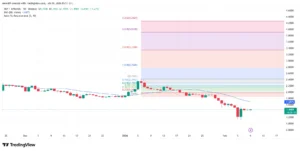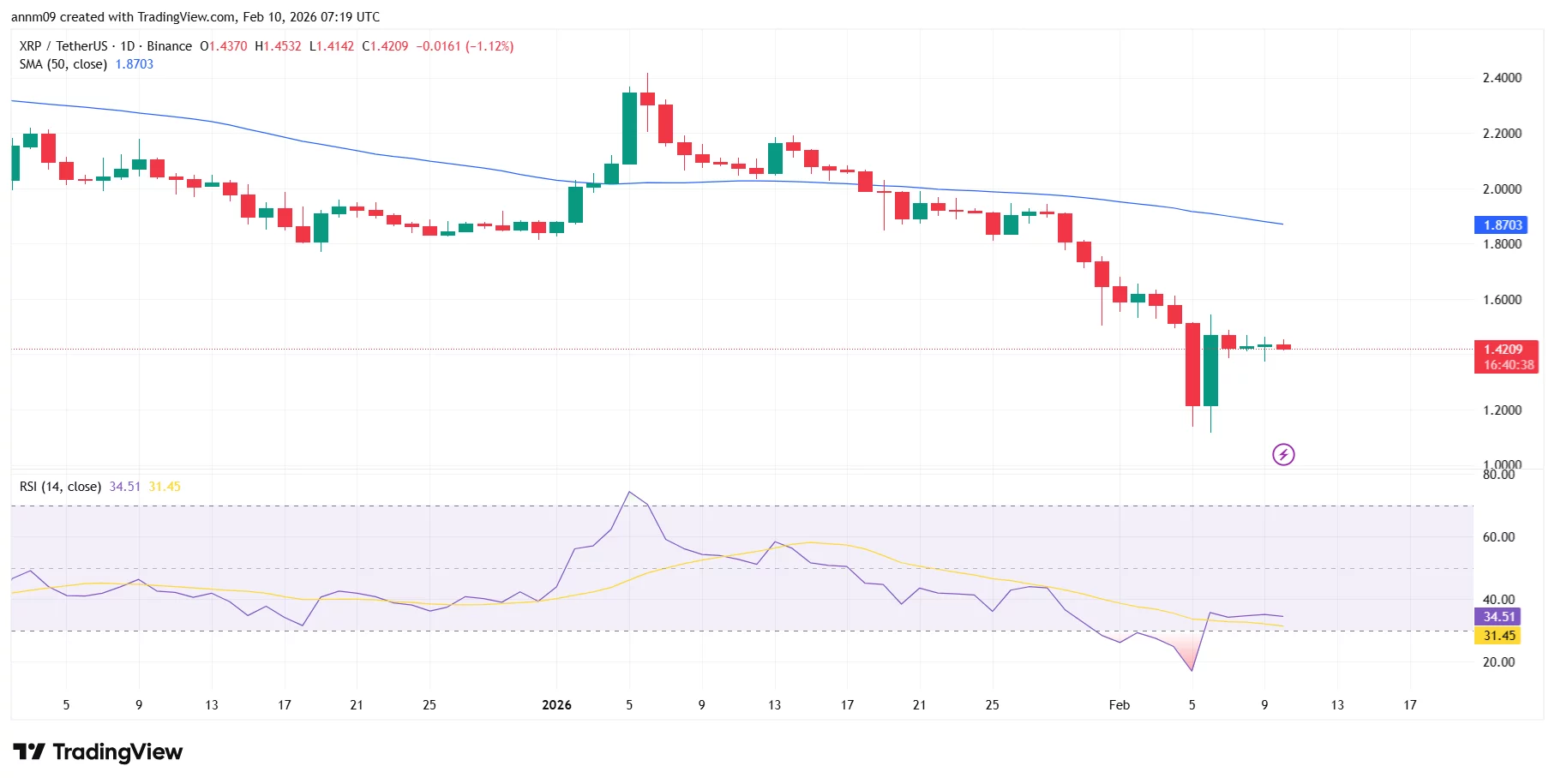
Looking ahead, XRP’s near-term price outlook is likely to remain pressured unless broader market sentiment stabilizes. XRP’s recent attempt to stabilize near $1.30–$1.40 was met with minimal buying interest.
The RSI, still in sub-50 territory, suggests that bulls have not regained control, and the price continues to trade below a declining 50-day moving average. That alignment of weak technicals and a broader market “risk-off” backdrop helps explain why XRP has been unable to gain traction.
In summary, while China’s sell call is not a fundamental driver of XRP’s underlying adoption or Ripple’s business prospects, it does heighten bearish sentiment across risk assets. This leaves tokens like XRP vulnerable and underscores the importance of monitoring macro news alongside crypto-specific indicators in any price prediction.
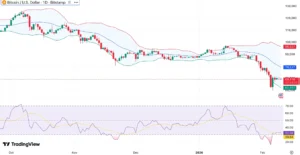
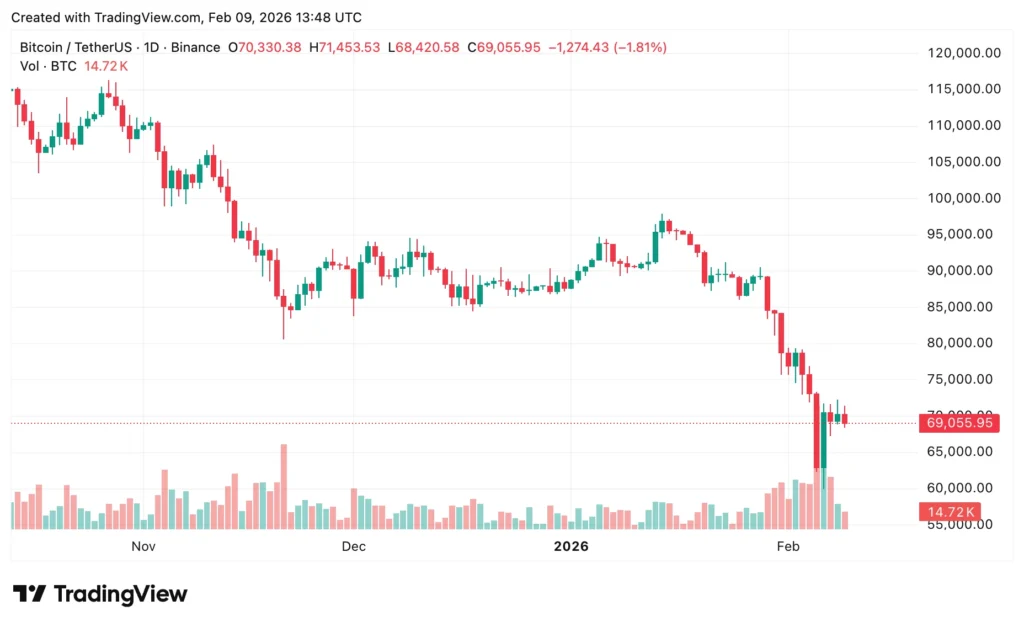
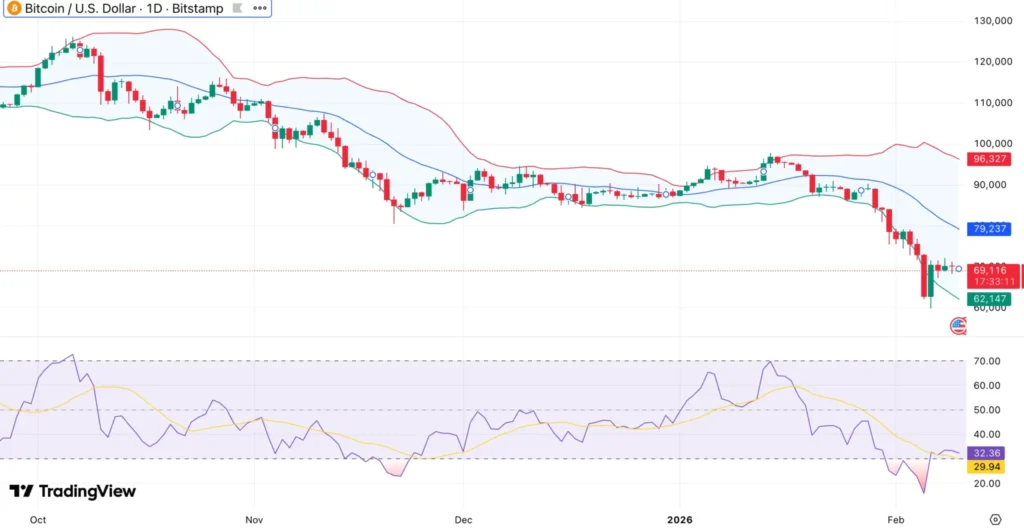
Bitcoin price slipped again on Feb. 10 after failing to stay above the $70,000 level, an area that had supported the market through much of the recent consolidation.
At press time, BTC was trading around $68,979, down 2% over the past 24 hours. The weakness extends across all major timeframes, with losses of 12% over the past week, 23% over the last month, and roughly 30% year-over-year.
The pullback has been sharp and persistent. Since reaching an all-time high of $126,080 in October 2025, Bitcoin  btc0.5%Bitcoin has fallen by nearly 45%. Rather than a single washout event, the decline has unfolded through steady selling.
At the same time, market activity has increased. Spot trading volume jumped 15.2% in the last 24 hours to $52 billion, pointing to active repositioning as traders reduce exposure or rotate capital.
Derivatives markets reflect a similar tone. CoinGlass data shows Bitcoin futures volume rising 4.97% to $70 billion, while open interest slipped 1.98% to $45 billion.
The combination suggests traders are closing positions faster than new leverage is being added, a pattern often seen during periods of distribution.